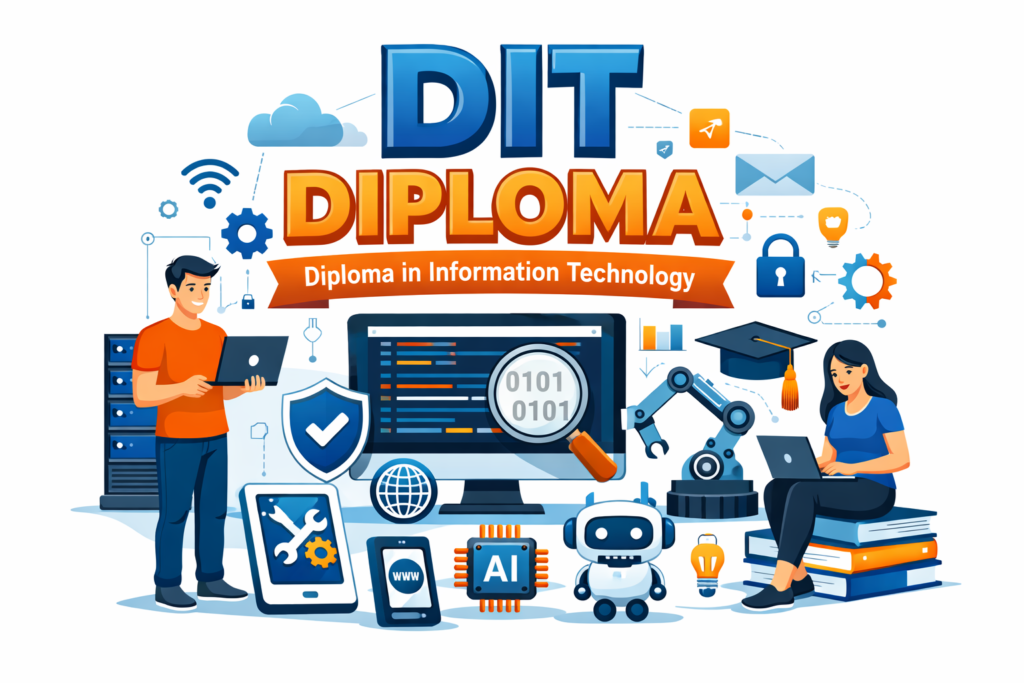
DIT Diploma Course introduction
Digital Skills for Modern Life:
First of all, DIT stands for Diploma in Information Technology. It teaches basic and advanced computer skills. Moreover, students learn how computers work. It also builds strong digital knowledge. As a result, learners become tech-confident.
Career-Focused IT Learning:
Secondly, the DIT diploma prepares students for jobs. It covers software, hardware, and internet tools. In addition, students practice real computer tasks. They learn typing, data entry, and office tools. Therefore, it increases job chances quickly.
Strong Foundation for Future Growth:
Finally, DIT creates a base for higher IT studies. It helps students move into web or software fields. Meanwhile, learners improve problem-solving skills. They also gain confidence in using technology. Thus, DIT opens doors to a better future.
Why Learn DIT Diploma Course?
Better Job Opportunities:
First of all, DIT helps you get entry-level IT jobs. It teaches skills companies actually need. Moreover, offices need computer-skilled staff. So, DIT makes you job-ready quickly. As a result, income chances improve.
Essential Computer Knowledge:
Secondly, DIT builds strong computer basics. It covers typing, software, and internet use. In addition, it improves daily digital work. You work faster and smarter on computers. Therefore, productivity increases easily.
Easy Start for IT Career:
Finally, DIT is perfect for beginners. It does not need advanced knowledge. Meanwhile, students learn step by step. Confidence grows with regular practice. Thus, IT learning becomes simple.
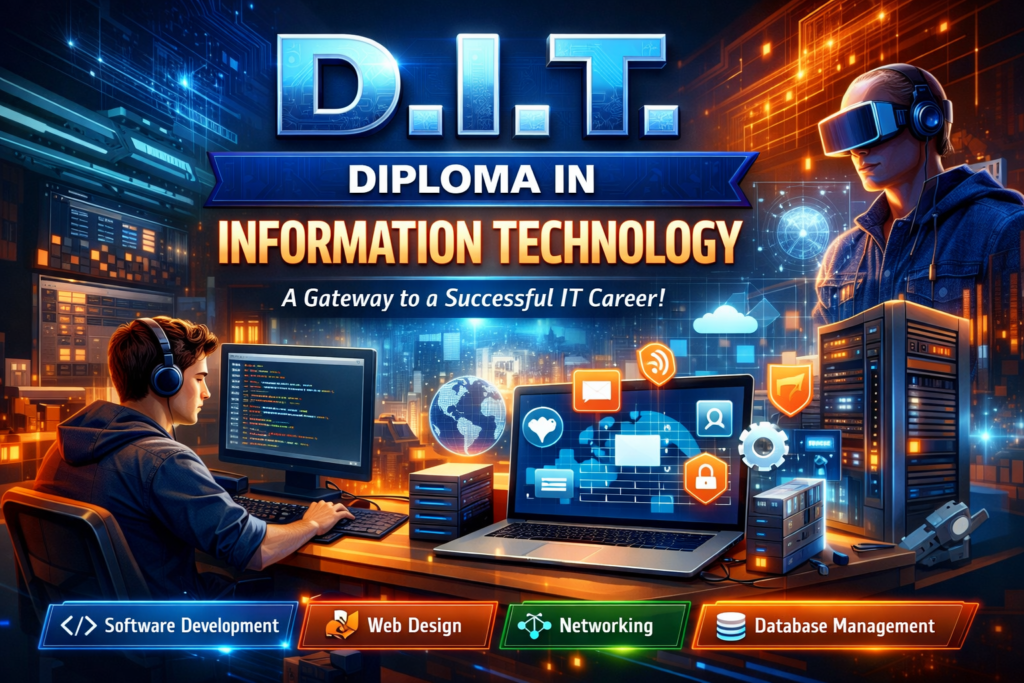
How to Learn DIT Diploma Course?
Start with Computer Basics:
First, learn computer fundamentals clearly. Understand hardware and software basics. Then, practice typing and file management. Also, learn MS Word and Excel. So, your base becomes strong.
Practice Daily on Computer:
Next, use computers every day. Practice lessons after each class. In addition, repeat tasks again and again. Mistakes help you learn faster. Therefore, skills improve quickly.
Apply Skills in Real Tasks:
Finally, work on small IT tasks. Create documents and simple projects. Also, explore internet and email tools. This builds real working experience. Thus, learning becomes practical.