

POSTGRE SQL Course Introduction
Understanding POSTGRE SQL Basics:
First, POSTGRE SQL is a powerful database system. It stores data in a safe and organized way. Also, it works well for small and large projects. Moreover, developers trust PostgreSQL worldwide. So, this course starts with clear basic concepts.
Why POSTGRE SQL is Widely Used:
Nowadays, many companies use PostgreSQL databases. Because it is fast, secure, and open source. In addition, it handles complex data easily. Therefore, it fits modern web and app development. As a result, learning PostgreSQL boosts career value.
What You Will Learn in This Course:
First, you will learn PostgreSQL queries step by step. Then, you will practice tables, rows, and databases. Next, you will understand joins and relationships. After that, you will manage real-world data tasks. Finally, you will gain confidence in database handling.
Why Learn POSTGRE SQL?
High Demand Database Skill:
First, PostgreSQL is in high demand today. Many companies use it for data management. Also, it supports large and complex databases. Therefore, jobs require PostgreSQL knowledge. So, learning it improves career opportunities.
Secure and Reliable Database:
PostgreSQL offers strong data security features. Moreover, it protects data from loss and errors. It supports backups and data recovery. Because of this, businesses trust PostgreSQL. As a result, developers prefer it for projects.
Free and Open Source Power:
PostgreSQL is completely free to use. Also, it has no license cost. In addition, a large community supports it. So, learners get regular updates and help. Thus, it is perfect for beginners and professionals.
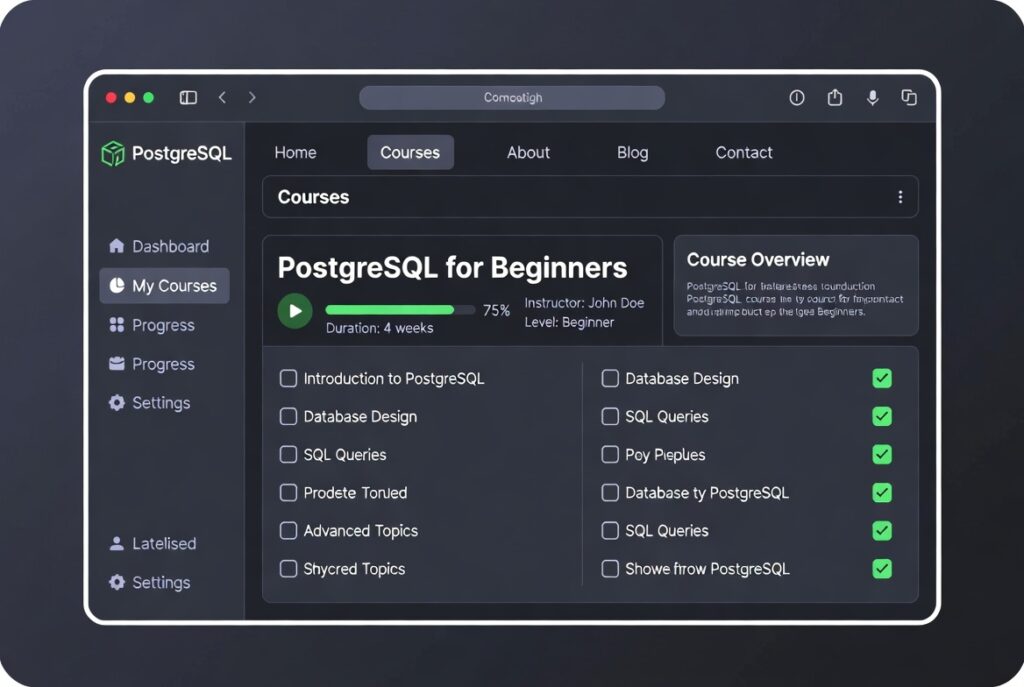
How to Learn POSTGRE SQL?
Start with SQL Fundamentals:
First, learn basic SQL commands. Then, understand SELECT, INSERT, and UPDATE. Also, practice simple database queries. Because basics build strong foundations. So, learning becomes easier later.
Practice with Real Data:
Next, create your own POSTGRE SQL database. Then, add tables and sample records. Also, try joins and conditions. Moreover, solve real-life data problems. As a result, skills improve faster.
Use Projects and Tools:
Finally, work on small POSTGRE SQL projects. Use pg Admin to manage databases easily. Also, connect POSTGRE SQL with web applications. Then, practice performance and optimization. Thus, you become job-ready confidently.